
When you first get into self-hosting, the jargon can hit you all at once. Hypervisors, VMs, LXC, Docker/Podman. People talk about them as if they are interchangeable, but they are not. They sit at different layers and solve different problems.
If you understand the difference early on, it becomes much easier to choose the right tool instead of copying whatever the tutorial says and hoping for the best.
The Hypervisor
A hypervisor is the layer that manages virtual machines.
It sits on the physical hardware and splits that machine into separate virtual environments. Think of it as the boss layer. It controls how CPU, RAM, storage, and network resources are shared out.
There are two main types:
Type 1: Bare Metal
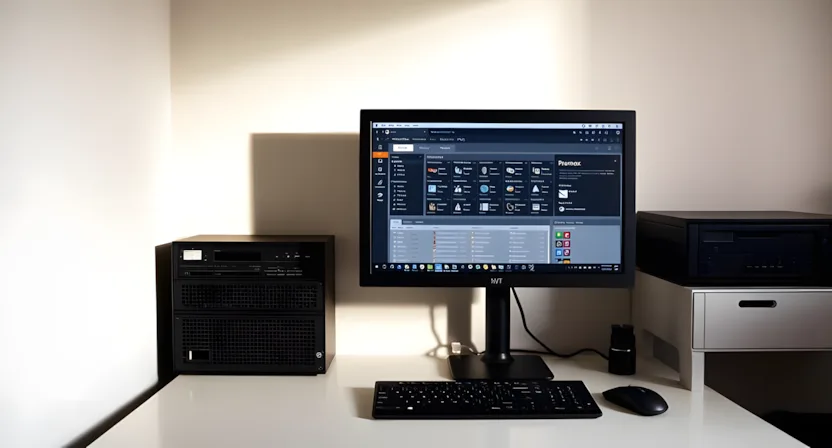
These run directly on the hardware without a desktop OS underneath. They are the most efficient choice for servers. Examples: Proxmox VE and VMware ESXi.Type 2: Hosted
These run as an application inside your existing OS. They’re best for testing a VM on your laptop. Examples: VirtualBox and VMware Workstation.
Virtual Machine
A virtual machine, or VM, is a full computer running inside the hypervisor.
It gets its own virtual hardware, its own memory allocation, and its own operating system. You can run Linux, Windows, or BSD inside it. Because the VM has its own kernel, it stays well isolated from other VMs and from the host.
That is the main strength of a VM: strong separation.
The downside is that VMs are heavier. They use more RAM, more storage, and more CPU than containers because they carry a full operating system with them.
A simple way to think about it is this: a VM is like renting an entire house just to use the kitchen. It is secure and private, but you are paying for a lot of space you may not need.
LXC
LXC stands for Linux Containers.
This is a lighter way to run isolated Linux environments. Unlike a VM, an LXC container does not bring its own full operating system kernel. It shares the host’s kernel, but keeps its files, processes, and networking separate.
Docker and Podman
Docker containers are mainly aimed at applications rather than whole systems.
Docker packages an app together with the dependencies it needs, so it can run the same way on different machines. That is why it is so popular for self-hosting. You do not need to manually install and manage every library on the host.
Podman works in a very similar way, but it is often used as a more security-focused alternative. It can run containers without a central daemon, and it is well suited to rootless setups, which some people prefer for tighter control.
Both Docker and Podman are usually the easiest way to deploy popular services quickly, especially when there is already a well-maintained image available.
In practice, many people run Docker or Podman inside a VM or an LXC container so the host stays clean and the apps stay organised.
Which one should I use?
It depends on what you are trying to host:
- Use a VM if you need a different operating system, or if security and isolation matter most.
- Use LXC if you want a lightweight Linux environment for testing, tinkering, or running a single service such as WordPress or Nextcloud with low RAM use.
- Use Docker or Podman if you want to deploy a popular app like Plex, Pi-hole, or Home Assistant quickly using a pre-made image.
Final Thoughts
For new self-hosters, don’t get bogged down in the deep technical bits. Just remember: Hypervisors run VMs. VMs are full machines. LXC and Docker/Podman are containers that share the host’s resources to save power and memory.
If you are using Proxmox, you have the best of both worlds—you can spin up a VM for things that need high security, and use LXC for the smaller, everyday tasks.